
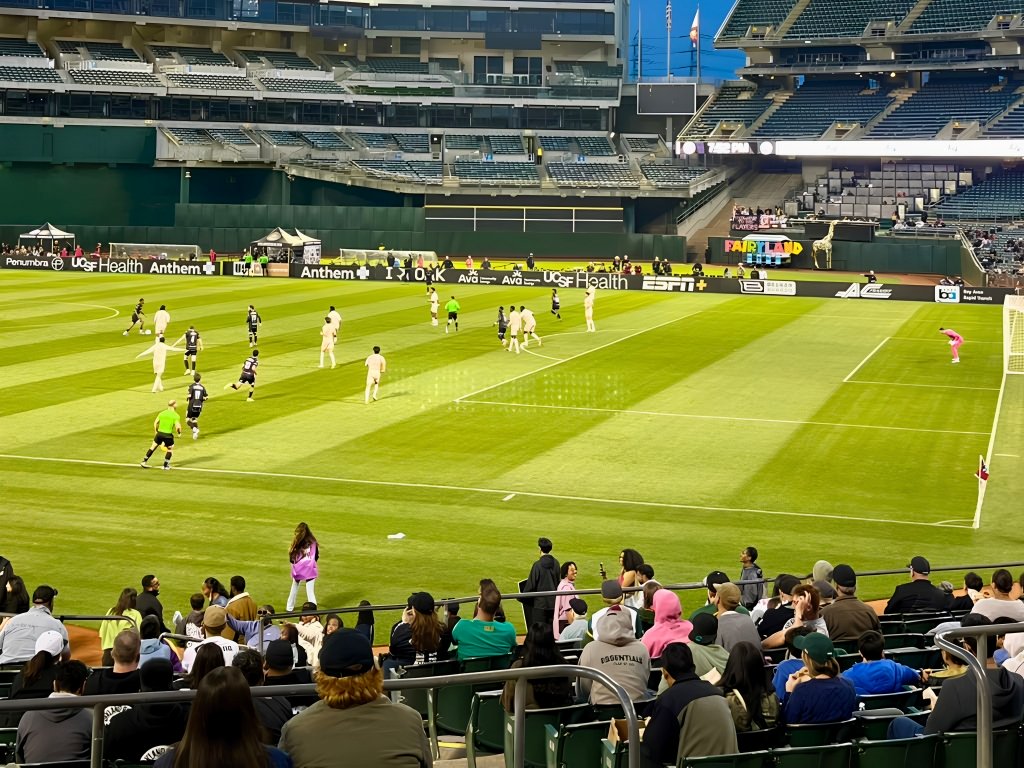
Breaking Into Football Through Data: Inside an FBA Internship with Oakland Roots SC
Modern football is no longer powered solely by what happens on the pitch.
Increasingly, commercial intelligence, supporter data, and fast business decision-making shape the modern game just as much as sporting performance. From ticketing strategy and fan engagement to revenue forecasting and operational planning, football organizations today rely on business insight to stay competitive.
For Alexis Smith, that reality opened an unexpected pathway into professional football.
A Candidate from the 17th Edition of The FBA’s Professional Master in Football Business, Alexis is currently completing her internship at Oakland Roots and Soul SC as a Data and Ticketing Intern, applying analytics inside a professional club environment while making a career transition from an entirely different sector.
Her pathway into football, however, was far from traditional.
From Insurance to the Football Industry
Before joining The FBA, Alexis spent seven years building her career in the insurance sector, first as a Product Analyst focused on data analytics before progressing into product development management.
It was a strong professional foundation built around strategic thinking, commercial analysis, and problem-solving. But despite that progression, Alexis found herself increasingly drawn towards a different ambition.
“I realized I wanted to turn my passion for football into a long-term career”, she explains.
Like many professionals considering a move into sport, the challenge was not motivation. It was access.
Breaking into football can be difficult without an established network or direct experience. For Alexis, The FBA represented more than an educational program. It offered something far more practical: a credible route into the game.
One element of the model stood out immediately: the guaranteed internship.
“The guaranteed internship was a huge draw because it would give me the chance to gain hands-on experience while transitioning careers.”
For career switchers, that distinction can be the difference between aspiration and access.
Learning about football in a classroom is valuable. Building experience inside a real organization is transformative.
Inside Oakland Roots and Soul SC
Today, Alexis is putting that transition into practice with Oakland Roots and Soul SC, one of the most distinctive and community-driven professional football organizations in the United States.
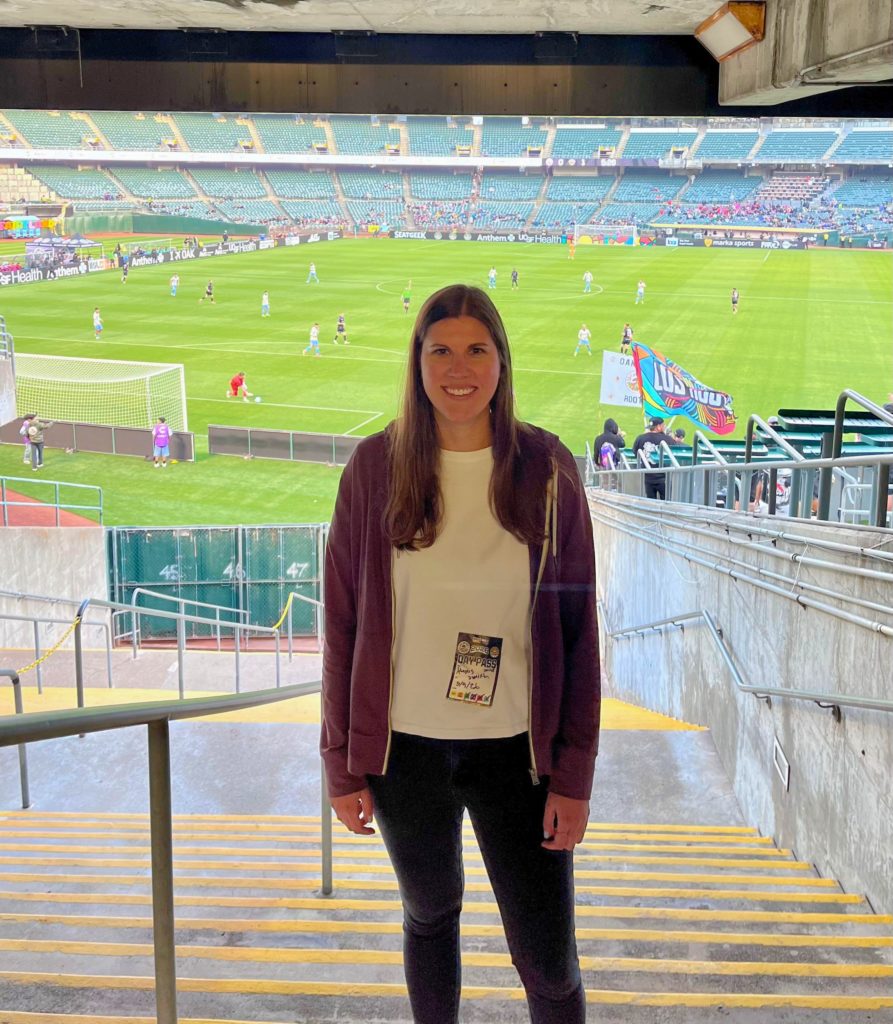
As a Data and Ticketing Intern, her role sits at the intersection of analytics, commercial strategy, and operational decision-making.
Because the club’s analytics team is relatively lean, Alexis has been given meaningful responsibility early on. Her work includes forecasting ticket sales, analyzing attendance and revenue trends, building pacing models, developing automated dashboards, and supporting leadership with data-driven insights that inform commercial decisions across the organization.
What makes the experience especially valuable is not simply the technical work, but the strategic context surrounding it.
“I’m not just preparing data, I’m also involved in conversations around what the data means and how it can support strategic decision-making across the club.”
That is where theory becomes commercial reality.
Data is not collected for reporting’s sake. It exists to support decisions, whether around revenue growth, fan engagement, campaign optimization, or broader business planning.
Alexis has also gained direct match-day exposure, attending home fixtures to better understand how supporter experience, commercial operations, and live event execution come together in practice.
That kind of visibility is difficult to replicate in a classroom alone.
How Data Is Reshaping the Modern Game
Football careers are often imagined through a sporting lens. The reality of the modern game is far broader.
Modern clubs increasingly depend on commercial intelligence to drive performance off the pitch. Understanding supporter behavior, forecasting demand, identifying retention opportunities, measuring campaign effectiveness, and optimizing match-the day performance have become essential business capabilities.
And perhaps most importantly, they operate at speed.
One of the aspects Alexis found most striking was the pace of decision-making.
“Because there are multiple matches each month, the pace of the season creates a constant need to react, adapt, and make decisions quickly.”
Unlike more traditional corporate environments with longer planning cycles, football organizations operate around fixed schedules, live events, evolving fan behavior, and immediate commercial consequences.
In that context, accessible, actionable data becomes a competitive necessity.
For professionals with analytical, commercial, or strategic skill sets, that creates compelling entry points into football.
From Classroom Learning to Real-World Application
One of the strongest aspects of Alexis’ experience has been the direct connection between classroom learning and practical application.
At The FBA, concepts did not remain theoretical for long. A particularly relevant example came from the Business Intelligence & Data Analytics module, where students explored fan segmentation as part of their coursework.
That experience reshaped how Alexis began thinking about commercial football data.
“The fan segmentation project pushed me to look beyond overall sales numbers and think more deeply about fan behaviors, engagement patterns, and retention opportunities.”
Those same principles are now being applied inside a professional club environment.
This is where practical education creates real value. Theory creates frameworks. Experience develops judgement. The combination helps professionals contribute faster, think more strategically, and adapt more effectively to the realities of the game.
Why Practical Experience Matters
For many aspiring professionals, the biggest obstacle is not ambition. It is relevance.
How do you convince an organization to take a chance on you without direct experience?
How do you transition from another sector without practical exposure?
This is precisely why meaningful internship experiences matter.
For Alexis, the internship has not simply strengthened technical skills. It has accelerated her commercial understanding, adaptability, communication, and ability to think strategically in a fast-moving professional environment.
“Rather than focusing only on building reports, I’ve been working on connecting the data to the broader business context and identifying insights that are actionable and relevant.”
That type of development is difficult to simulate academically.
It comes from working alongside professionals, understanding stakeholder priorities, navigating live business needs, and operating inside the pace and complexity of a real football organization.
As Alexis puts it:
“The FBA internship gives you the opportunity to fully immerse yourself in a professional football environment while gaining hands-on experience and a real understanding of how the business side of football operates day to day.”
Looking to Build Your Own Path into Football?
For professionals considering a move into football, whether from analytics, marketing, finance, commercial roles, or entirely different industries, the opportunities are broader than many realize.
The challenge is rarely ambition. It is finding the right bridge.
That is exactly where The FBA’s Professional Master in Football Business makes a difference.
With industry-focused learning and a guaranteed internship built into the experience, the FBA program helps ambitious professionals turn intent into real opportunity.
Applications for both the March and September intakes are currently open. In addition, the Early Bird Scholarship, offering up to 15% tuition fee reduction, is automatically applied to candidates who confirm their place before May 31. Apply Now.